
June 2026: From the Three Bears to Goldilocks
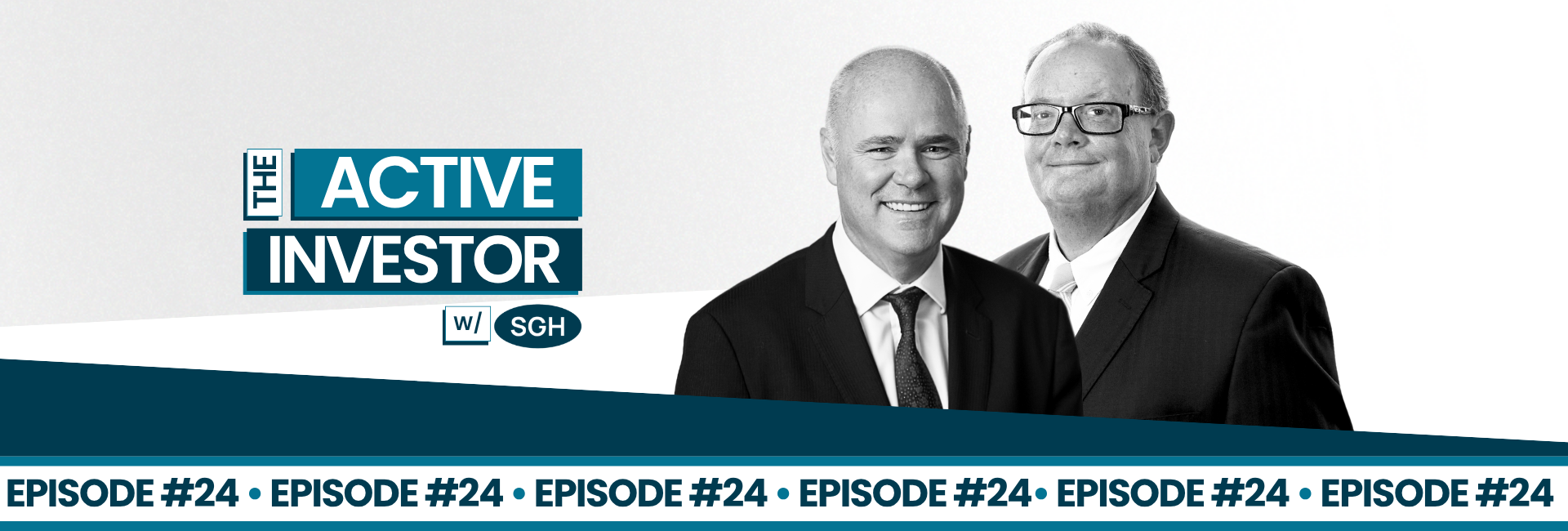
Episode #15 of The Active Investor with SGH dives into the September 2025 reporting season – record volatility, small-cap strength, and the widening gap between domestic defensives and global cyclicals. Steve Hiscock and Hamish Tadgell discuss standout results, sector surprises, and why stock picking matters more than ever.
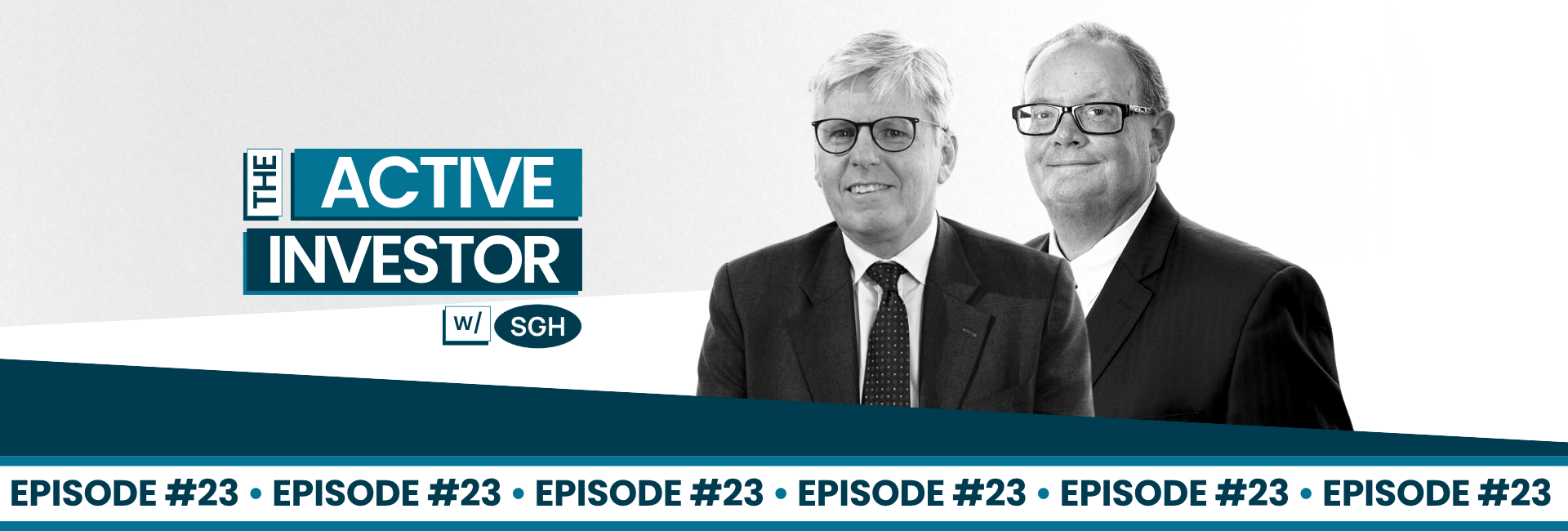
In episode #23 of The Active Investor with SGH – June 2026: From the Three Bears to Goldilocks – In this episode of The Active Investor with SGH, CIO Rob Hogg is joined by Senior Portfolio Manager Hamish Tadgell to discuss the key themes driving markets in May. They explore the resilience of the US economy, the continued strength of AI-related investments, Australia’s lagging market performance, and the outlook for interest rates, earnings and inflation. The discussion also covers opportunities emerging across commodities, infrastructure, technology and gold, as well as how portfolios are being positioned in an environment characterised by heightened volatility and ongoing geopolitical uncertainty.
More places to find our podcast:
June 2026: From the Three Bears to Goldilocks
Rob Hogg:
Hello, this is Rob Hogg from SGH, and welcome to the June edition of the Active Investor. Steve Hiscock’s away this month, but my very special guest for the month will be Hamish Tadgell with whom I’ll be doing a bit of a Q&A. Just ahead of that this podcast we’re recording on Tuesday, June the 2nd.
And look as we always do, I’ll just run through some of the key sort of market returns and just a little bit of the key data. But I’ll just be pretty brief with that, and then Hamish and I will do something much more interesting which will be some of this Q&A. So anyway, to market performances over the month of May.
Looking around the globe most equity markets were positive. Some were really positive. The Nasdaq, for example, in the US performed very strongly, up almost ten percent. And we had a pretty strong return as well in the Japanese market rising almost twelve percent. Now, some of the underlying reasons there for, indeed for both of those equity market performances was the fact that growth outcomes are coming in a bit stronger than expected, and indeed a good deal stronger than had been feared just a couple of months ago.
So that was broadly the story globally. Here in Australia, the equity market was also up, but way less robust than most other global markets. Only really one percent or fractionally more for the month of May. And look, probably weighing on the market performance here is not only the RBA’s rate hike in May, but also expectations of further rate hikes to come.
The only good thing we can really say is that as at the end of the month, as at the end of May, the extent of further rate cuts has been somewhat downgraded compared with expectations at the end of April. And that really leads us to interest rates. What did they do over the month? Right around the globe, they rose during the first half of the month, but generally then eased a little bit lower towards the end of the month.
And that’s mainly as the oil price started to slip away a little at the end of the month. Oil actually finished the month down quite a deal and with that a big impact on interest rates. But interestingly enough, even with that second half decline in yields the Japanese and the US market both ended the month with higher yields than the end of April.
But here in Australia we saw quite a significant rally in yields, and they slipped more than any other market actually during the course of May. Measures of market volatility, which we often look at, so the VIX, which is reasonably well known, that’s a measure of expected volatility for equities. That continued to ease a little bit. And the MOVE Index, which is the similar measure for bonds that similarly eased. So these two indices of expected volatility had risen incredibly in March, of course, as the Middle East war broke out, but the last couple of months they’ve eased. That really just leaves us with the Aussie dollar.
Look, very little changed at around seventy-two cents or slightly below as at the end of the month now of course what happened in the Middle East and what Trump said and what oil prices did, these continued to be the most significant determinant of what was going on in markets.
But I think it’s fair to say that macro data just took a very slightly more important role during the course of the month. And that’s the next thing I want to talk about actually, just the resiliency in the US economy and in, and company earnings in the US. US equity market equity markets, so we’re looking here at the Dow, at the S&P, the Nasdaq, and also the Russell 2000, that’s the smaller company index. Those indices, broadly speaking, have done better than most other markets this year except perhaps Japan. And look, one of the key drivers of this has been just the ongoing resiliency of the US economy.
And one of the things that is really prominent now is that the current pace of the US economy, so in the June quarter, the estimated pace, as estimated by the Atlanta Federal Reserve Bank the pace of the US economy is somewhere around four percent, whereas expectations from economists really lie in a range of around half a percent to two and a half percent.
And in fact, the current pace of the US economy is above even the most optimistic economic forecaster amongst the preeminent forecasters in the US. And I think that’s pretty telling when you’ve got an actual observation above the most optimistic forecast. So that’s been important, but of course, the ongoing AI story and earnings in that area of the market are extremely important as well.
And what we’ve seen is since the war began whilst the S&P has returned around nine percent, stocks involved in the AI infrastructure build have returned around thirty-three percent, whereas the equal-weighted S&P five hundred, so that’s just all of the stocks in the five hundred, all with the same weight, so not market cap weighted, that has returned only one percent.
So we can see quite clearly the extremely powerful performance of AI and AI earnings. Now, of course, at times like this when the market is still expensive as it is on a price earnings ratio basis, there’s always questions about how much longer can this go on and are there any signs that we’re about to come to an end in the market’s rally?
There are a reasonably well-known set of indicators that that often occur in the lead up to market corrections, and we’ve certainly seen some of them, some cautionary flags if you like. So some recent surges in investor risk appetite and the extremely strong performance of say the momentum factor.
Look, by and large, we don’t have all of the factors in place to suggest that we’ve– we’re looking at an imminent end of the bull market. Things that would need to fall into place really would need to include more signs of excessive speculative risk-taking, but probably more importantly, a deterioration in the fundamental backdrop.
Now, that could either be higher interest rate expectations on the back of higher inflation and, or ’cause they could coexist, the falling, a falling away in economic growth in the US. But if anything, we’re starting to see the opposite in the US. What about other areas? I mentioned Japan just briefly before continuing to surprise on the upside in terms of growth.
There’s a new, relatively new prime minister in Japan, and she’s coming very clearly with a pro-fiscal policy bias. And I think we’re starting to see that increasingly priced into the market. It’s always interesting to look to Europe. Europe almost always looks at the glass as being half empty. But what we saw in May is that some of the surveys there, the outlook surveys, and I’m speaking here specifically about the Ifo Institute’s Business Climate Survey, they have actually- they’re starting to show signs of bottoming out and starting to get a little bit better. They’re still pointing to a pretty tepid outlook, to be fair. They’re still at low levels. But what is important here is the fact that if May is any guide at all, it may not be, but if it’s any guide at all, it looks like some of the worst has come and gone.
What else is important? What else has happened during the month? US monetary policy, always one of the most important things, and interestingly, there at the margin– on the margin policy expectations amongst market participants or investors, we move from just a very slight expectation of potential rate cut. And I’m not saying a full rate cut that wasn’t priced in. It was significantly less than a rate cut, but it was lower policy rates by the end of the month. That’s now swung to slightly higher policy rates by the end of the month– by the end of the year, I beg your pardon. But again, not a full rate hike.
But the change in the balance there, I think, is important. And that’s really on the back of the growth surprise we’ve been talking about, but also the fact that inflation momentum is quite clearly starting to rise in the US, whether we look at underlying inflation, so trimmed mean and measures like that, or if we look at very broad-based measures of inflation like consumption expenditure deflators, for example.
So, as I say, a slight uptick in rate hike expectations. Nothing significant at the moment, but were this to continue, this would perhaps contain the kernels or kernel of some negativity for the market. What about Australia? The RBA raised rates in the around the first week of May. That was broadly as expected. But by around the middle of the month after rising yields here started to slip away. A couple of key reasons for that. One was the fact that global yields started to rally, so yields started to fall. But the other was the fact that we had a couple of key indicators, inflation and employment during the month that came in a little bit lower than expected.
The headline inflation rate just a little bit lower than the previous month, and the labor force report coming in a bit weaker than expected with the number of people employed falling by almost twenty thousand and the unemployment rate increasing to four point five from four point three. So together, the slightly lower increase in inflation and the negative outcome for employment, they have both further propelled this slight adjustment in expectations for monetary policy here.
So what does that actually lead to, and what does that actually mean? The market’s now pricing effectively one rate hike before the end of the year, whereas a month or so ago, they were pricing slightly more than one rate hike compared with where we are now in terms of the official cash rate.
So, a slight change. In a sense, it’s- we’ve gone in the opposite direction to what the US has done and look, just finally Aussie equity market performance in May, pretty modest. Modest total return, a little bit over one percent total return in May. But there was an enormous amount of volatility during the month.
The index up or down by more than one percent on almost ten occasions during the course of the month. So that volatility really reflecting what was going on in terms of the Middle East and the latest pronouncements from US President Trump. We had some earnings warnings during the course of the month, some- for some pretty big stocks including CSL, Brambles and ASX.
We had a negative month for almost all of the major financials, the three of the four major banks, a negative return. But look, one of the intriguing things is just as the bond market has started to started to ease in terms of its rate hike expectations, still expecting rates up, but not as much as previously.
It’ll be interesting to see if and when the equity market starts to look at those sorts of factors as well and starts to look through RBA rate hikes.
Anyway, I’m starting to lead into Hamish’s area. So I’d like to welcome Hamish Tadgell a senior portfolio manager here at SGH, responsible for running a number of portfolios here for SGH clients so thank you very much, Hamish.
So look, if I could just pose some questions to you. I’ve, I spoke just fractionally ago about the volatility. May, pretty volatile. But it’s been a volatile year to date. Can you just give us a bit of a background to, to what’s been happening, please?
Hamish Tadgell:
Yeah, look, I think it’s been incredibly volatile, Rob. We’re down 7% alone in March, and seen a strong bounce back in late April, May. The first point I would make is that, and to your point before, global growth has probably been slowing a bit, but US, we’ve certainly seen some, green shoots coming through.
But I would make the overall comment that I don’t think the world at this point is sliding into recession. But the outlook is clearly more difficult, and that’s been really as a result of the elevated geopolitical risks in Ukraine, but, ongoing wars in Iran, I should say, but ongoing wars in Ukraine as well.
And the key thing which you alluded to earlier is just inflation expectations, which have been moving around a fair bit, but probably on the rise more broadly because of, higher energy prices higher commodity prices, and what we’ve seen in terms of supply chain disruption.
And that has certainly resulted in volatility in market leadership. The other thing is clearly that’s had impact on bonds and interest rates, and we have seen those rising bonds, and at the end of the day, that goes to the heart of duration and to growth for equities and valuations for equities, and has led to a quite a pronounced sell-off in a number of sectors, REITS in particular growth stocks outside, AI, which you alluded to earlier
Rob Hogg:
Tell me and May was another example of this, where the local market really lagged what we’ve seen in some global markets.
Can you just give us a little bit more colour on the reasons why the ASX has lagged in terms of total return relative to most other global markets this year?
Hamish Tadgell:
Sure. Look, I think clearly in Australia, we’ve one of the few countries that we’ve seen rate increases. So, we’ve had three rate increases this year, and clearly that’s seen a tightening in financial conditions and really goes, to the heart of sort of the growth in equities being, at the end of the day, very much earnings driven and driven by growth.
It has seen many sectors underperform. The only real sectors that have outperformed in a material way have been materials and energy or resources and energy. There are some ups and downs, but more broadly there’s been a lot of volatility and a lot of movement. But you look at material stocks are up, I think 60, close to 60% in the last 12 months, and it’s been the absolute, the clear outperformer.
The banks have clearly, have been another area which have been strong, but more recently have come back a bit, and maybe we can talk a bit about that in more detail in a moment. But I think that comes back to the point you were making earlier that, It’s really the earnings resilience that we’re seeing in the US primarily driven out of, a lot of the technology stocks, and particularly the last quarter was one of the strongest quarterly US earnings seasons in about a decade.
And in Australia, we’re seeing the opposite, we’re probably seeing earnings downgrades more than we’re seeing any earnings upgrades at this point outside, the resources and energy space, which are clearly benefiting from those higher commodity prices.
Rob Hogg:
Let’s talk about banks.
Obviously, an incredibly important sector and one that’s seen extraordinary… admittedly really driven by one stock overwhelmingly. But what’s the outlook now, do you think, for the sector?
Hamish Tadgell:
Look, I think the sector’s pretty fully priced, is the first thing I would say. Valuations are stretched by historical standards which creates a more difficult starting point.
Then if you look to credit growth which is clearly one of the key drivers for banks, late last year second half of last year there were signs that credit growth was picking up. But I think with the rate increases that we’ve seen the three rate increases we’ve seen and- I think just more recently in the very short term, some of the budget changes we’ve seen around negative gearing and capital gains tax credit growth is starting to slow.
And the bank reporting season in May certainly highlighted that. It also highlighted that some of the bad debt provisioning is starting to increase a bit. So, banks are being a little bit more cautious in this environment, recognising some of the pressures that, particularly small businesses are under with higher energy costs at the moment, and higher labour costs.
We’re not seeing a dramatic deterioration in credit at this point, but more cautionary approach taken by the banks instead of increasing some of their provisioning around that. So, I think we have seen the banks come off probably 10 to 15% in the last sort of six, eight weeks.
One thing I would say, though, lower credit growth could see better capital generation for some of the banks, and that may see the possibility of potentially some dividend upgrades. That’ll be very much conditional upon the bad debt outlook, though.
Rob Hogg:
Great. Thank you. Can we just talk a little more broadly then about the outlook for Aussie corporate earnings?
Hamish Tadgell:
We went during the month to the Macquarie Conference and there’s in excess of sort of 120 companies that present at that conference, and it always provides a pretty good sort of litmus test as to where things are. And I have to say, came away probably a little bit more positive than I went in, was expecting to go in, in that there were a few downgrades, but there weren’t as many as we might have expected. And I think that probably speaks to just a couple of things. One the resilience of how companies are managing their costs and are very focused on running businesses efficiently.
Secondly, I think there was clear signs that activity has slowed, but maybe we’re not, haven’t seen it come through to a significant extent to this point. So, I think it’s going to make the August reporting season pretty important. The other thing I would say though is that Australian companies’ ROE is certainly lower than, what we’re seeing in some of the US companies.
ROE and earnings at the end of the day are reflected in valuations and stock performance. And I think in part that’s been reflected in sort of some of the productivity and particularly some of the energy issues that companies are facing. Certainly, one of the themes that come forward from the Macquarie Conference was, that rising energy costs and the way that it’s feeding through, and companies are having to work really hard to ameliorate that.
And I think the other thing which we’re very conscious of at the moment is just wage cost pressure. So, businesses that have got big, large labour forces I think are starting to see a bit of pressure. And things like the 4.75 minimum wage increase today that we saw coming through, I think will only add to that.
Rob Hogg:
Tell me, can we talk about opportunities then? We’ve both spoken a bit about the whole AI thing, and of course everyone talks about AI all the time, a very clear spot and hive of activity. How are you thinking about that activity in, in the, that opportunity in the local context?
Hamish Tadgell:
Yeah, it’s a really good question, Rob. And I think, again, it was a, it was probably in the top three things that companies were talking about at the Macquarie Conference. I think it’s an undeniable step change that we’re seeing here. It’s in its very early stages, but it’s moving at incredible speed.
And I think, we’re still very early in trying to work out what the use cases for AI are and ultimately, what the impact will be in terms of, cost savings versus revenue benefits that we’re going to see from companies. It does feel a little bit like the Amazon moment to me sort of 10 years ago, where there’s this sort of euphoria that came and this pivot to with Amazon, that everything was going to move online, and we were never going to shop again in a retail shop.
And feels a little bit like that in AI at the moment, that everyone’s going to lose their job, and AI’s going to replace everything. And I think there’s certainly an arms race going on. But I think we need to be a little bit nuanced in how we think about it. So, way we’re thinking about it is, clearly, who are the beneficiaries?
Immediate beneficiaries, I think it’s unquestionable, I think companies that have got, in the data center space, the LLM models large language models, hyperscalers. And then I think the question is who are going to be the beneficiaries beyond that? So, when we actually start to use this large language models for inference and for R&D, who’s going to be the beneficiaries? Is it going to be in the healthcare sector? Is it going to be in service sector, et cetera? And that’s not m- that’s less obvious to us. What the market’s done, though, is shot first in asking questions later in some of these cases. And what we have seen in the market this year is a massive de-rating in growth stocks in Australia.
So, we don’t have a lot of the, the hyperscalers and the like. We have some data center companies, like NextDC, Infratil, Goodman Group, which we hold in our portfolios and have done very well. But a lot of the software companies a lot of the service provider companies – insurance brokers, there’s concerns that they’re going to be disintermediated by AI, that the business models are going to be disrupted, that the competitive advantage is going to be lost, and ultimately, that the terminal value around those growth for those businesses is going to be de-rated.
And that’s certainly being reflected in the share prices at the moment.
Rob Hogg:
Thanks, Hamish. Let’s just see one other sector that was very much in focus or has been actually for a couple of months. Healthcare been a dramatic underperformer. Are you able to give us a bit of a sense into what’s been driving that and what the outlook, in fact, might be?
Hamish Tadgell:
Yeah, look, I think in the ASX, but more globally, healthcare has really been struggling. And it’s the biggest underperformer by some margin in the Australian market over the last sort of 12 months and probably last few years. I think there’s a number of things at play here. It’s almost a bit of a perfect storm for the healthcare sector.
There’s certainly some idiosyncratic risks around companies like CSL and it was very much COVID impacted and a delayed recovery. But more broadly, I think there’s probably three or four things that’s weighing on the sector more generally. The first is technology innovation, and we’ve talked a bit about AI. And the other thing which I think is important to recognise is, the discovery of the human genome saw… has seen this wave of RNA technology which is really using gene therapy and it’s revolutionizing, drug discoveries in things like cancer autoimmune disorders, genetic diseases and therefore disrupting a lot of the incumbents, which is causing their market to say are these businesses worth what they… we thought previously? We’ve seen that very much here also in things like GLP-1, so the obesity drugs that are impacting obstructive sleep apnea and CPAP for ResMed. Questions about how disruptive is it going to be? Is it going to dent the market for ResMed and the like? The second thing is that we’ve seen quite a lot of change in the regulatory protocols, particularly the FDA with the appointment of JFK Jr. In the US, or Robert Kennedy in the US. And that has seen some speeding up of clinical trials, again People assuming are drugs going to be easier to get to market than they were previously? The other thing is just with the fiscal pressures around the world; we’re seeing quite a bit of pressure on reimbursement rates.
A lot of healthcare companies you know, depend on that. And lastly, with an increase in inflation, we’ve seen increase in wages in order to try and maintain real wages. And for companies that are in the healthcare space, like hospitals and the like, that are very labor intensive, that clearly goes to their margin pressure for those businesses.
So, it’s not one thing, but the combination of all of those things has seen, the healthcare stocks in general under huge pressure.
Rob Hogg:
Thank you. As you say, a global phenomenon. Yeah. All right, now look, just finally, can we just speak about positioning? How is the portfolio positioned in this, in the current and the expected environment?
Hamish Tadgell:
Look, as we said, it’s been incredibly volatile. And, there’s been some clear areas of the market like commodities and AI that have seen very strong momentum. We’re very conscious of not chasing the momentum, but we are very conscious of following the fundamentals. And to us the commodity space, the material space still looks very attractive.
Commodities typically outperform in an inflationary environment. We think that inflation will probably prove to be more persistent. And so that certainly helps both soft and hard commodities, but particularly things like copper, aluminum we’ve seen very strong. In addition to that, clearly with the geopolitics and with the energy crisis as it stems from that, we’re seeing increased demand for things like EVs and also rare earths, lithium and the like.
And stocks in that space are doing well. So, things like Pilbara Minerals and on the copper side, BHP and Capstone Copper are doing very well. In a rising inflation environment or more inflation persistence, we also want to be invested in companies that have got good pricing power.
So, some of the telcos, we’ve seen Telstra, Chorus, are continuing to be able to push through price increases. And the supermarkets can typically benefit from just rising food cost inflation on their sales line. The other area which we particularly like at the moment is service providers into these spaces.
Companies that are helping build and service data centers, the build-out of electricity networks, the whole renewable space companies like Downer, Seven Group are beneficiaries there. Just lastly gold. Gold has been, pretty volatile. Price peaked earlier this year-, has come back a bit.
But we continue to be overweight position in most of our portfolios for gold because we do think that with rising government debts and concerns around monetary independence or central bank, I should say, independence particularly, I guess we’re seeing that in the US that gold is a good hedge in the portfolio still.
So, to summarize it, Rob it’s very much continuing to focus on the fundamentals, focusing on, quality earnings and yield sustainability businesses with pricing power and that, in this environment, if, particularly if rates are going up a little bit, they’ve got good balance sheets and are conservatively geared.
Rob Hogg:
Tremendous. Thank you very much, Hamish. And thank you to all of you for listening in to the June Active Investor Podcast. Special thanks to Hamish Tadgell coming in today as our guest fellow is it podcastee? I’m not sure. Whatever the term is. But thank you very much, Hamish.
Hamish Tadgell:
Thanks, Rob.
Rob Hogg:
It’s been tremendous to have you along.
Hamish Tadgell:
Nice to be here.
This podcast is produced by SG Hiscock and Company. It does not constitute financial advice and assumes a certain level of knowledge. It is general information only and does not take into account the investment objectives, financial situation, or needs of any person, and should not be considered a recommendation.
Follow us on LinkedIn, YouTube, Spotify, Apple, or wherever you get your podcasts from.
Please let us know if you have any questions or comments. Until next time, stay informed and stay active.
___
Disclaimer:
This podcast is produced by SG Hiscock and Company. It does not constitute financial advice and assumes a certain level of knowledge. It’s general information only and does not take into account the investment objectives, financial situation, or needs of any person and should not be considered a recommendation. For more information, visit: https://sghiscock.com.au/podcast-disclosures-and-disclaimers/.

Stay in the loop
Get the latest insights and company news direct to your inbox.
SG Hiscock & Company (SGH) has prepared this article for general information purposes only. It does not contain investment recommendations nor provide investment advice. Neither SGH nor its related entities, directors or officers guarantee the performance of the Funds. SGH also doesn’t guarantee the repayment of capital or income invested in the Funds. Past performance is not necessarily indicative of future performance. Professional investment advice can help you determine your risk tolerance as well as your need to attain a particular return on your investment. We strongly encourage you to obtain detailed professional advice. We recommend that you read the relevant Product Disclosure Statement and Target Market Determination, if appropriate, in full before making an investment decision.SGH publishes information on this platform that is, to the best of its knowledge, current at the time of publication. It is not liable for any direct or indirect losses attributable to omissions, outdated, inaccurate, incomplete or deficient information. Investors and their advisers should make their own enquiries before making investment decisions.